
By Debt Calculator Hub · Updated November 4, 2026 · Methods and editorial standards

Current balance is a snapshot; a payoff quote is dated
Your displayed balance may omit interest through the day your final payment arrives. A lender’s payoff quote sets an amount for a specified date and may include unpaid fees or a contractual prepayment charge. Confirm the quote and its payment instructions with your lender before paying in full.
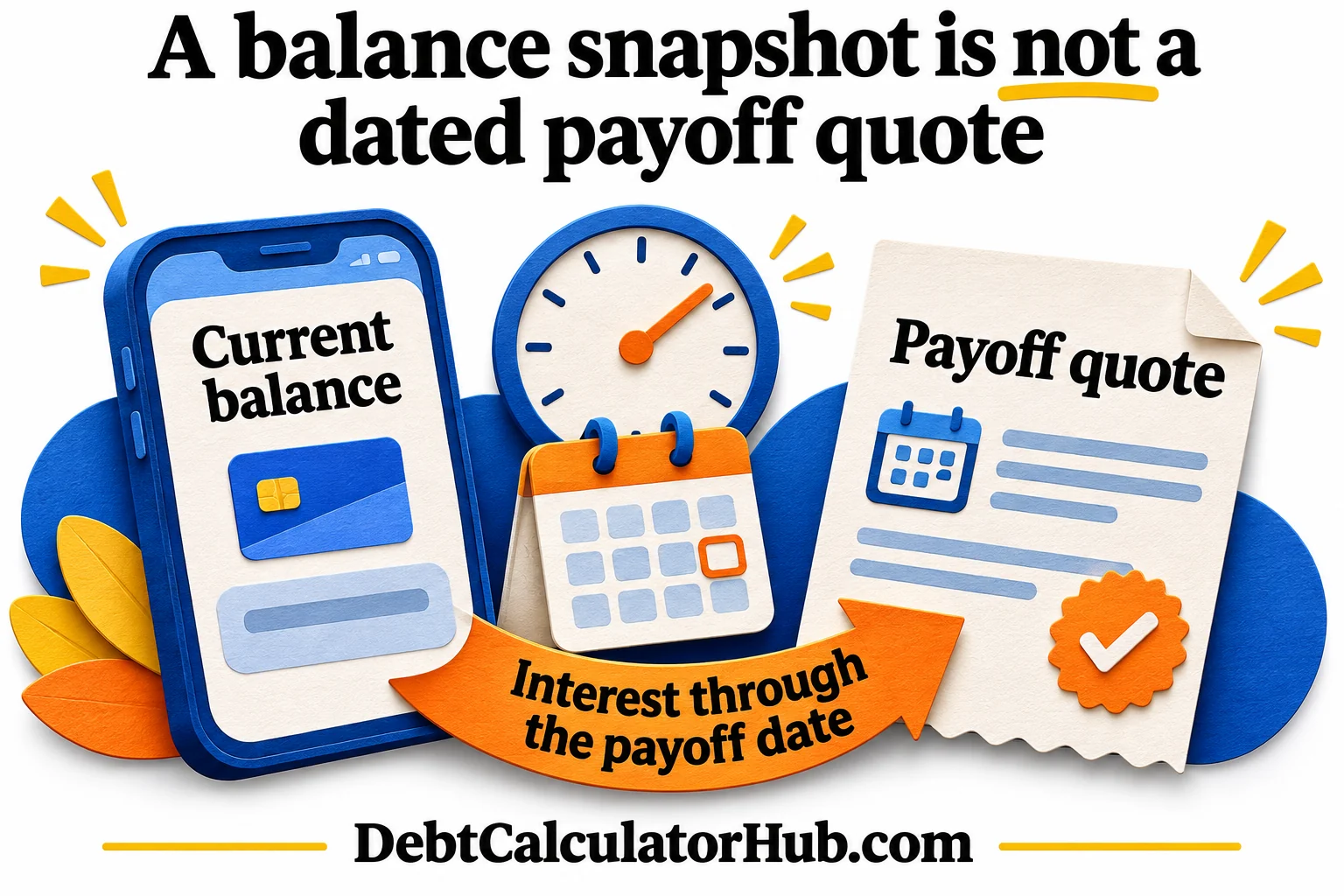
The difference
A current balance is what the account shows at a point in time. A payoff amount is the amount needed to fully satisfy the debt through a specific payoff date. The two numbers can differ because interest may continue accruing.
This difference can surprise borrowers. You may log in and see one balance, then request a payoff quote and see a slightly different amount. That does not always mean something is wrong. It often reflects interest through the date the lender expects payment.
Why payoff amounts change
Loans and credit accounts may add daily or monthly interest, fees, or other charges. If you request a payoff quote today but pay later, the lender may calculate additional interest through the payoff date.
A payoff quote states the amount needed to satisfy the balance for a specified date, subject to the lender’s conditions. Paying a revolving balance to zero does not necessarily close the credit account.
Why it matters
If you send only the current balance when the payoff amount is higher, the debt may not be fully satisfied. A small leftover balance can continue to accrue interest or cause confusion. In some cases, a small remaining amount can also lead to more statements or payment notices.
That is why final payoff should be based on the lender’s payoff quote, not only the balance shown in a dashboard.
When to request a quote
Request a payoff quote when you are ready to pay a debt in full, refinance, sell a vehicle, or close an account. The quote should state how long it is valid and where to send payment.
Timing matters. If the quote is valid through a certain date, make sure the lender receives the funds by that date. If you miss the date, request an updated quote instead of guessing.
How calculators fit in
A calculator can estimate payoff timing and interest, but it is not a lender payoff quote. Use it for planning: how long a payment might take, how much interest you may pay, and how extra payments could change the timeline.
When it is time to pay the account in full, switch from estimate mode to confirmation mode. Contact the lender or use the lender’s payoff quote tool if available.
Credit cards vs installment loans
Credit cards can change because new purchases, interest, and fees may post after the displayed balance. Installment loans can change because interest accrues between the last payment and the payoff date. Auto loans, personal loans, and student loans may each have their own payoff process.
The safest approach is to avoid new transactions, request a quote close to the payment date, and follow payment instructions exactly.
Practical takeaway
Use calculators to prepare your plan, but use the lender payoff quote for the final payment. That helps avoid underpaying by a small amount. If your goal is to become debt-free, the last step should be confirmation that the account shows a zero balance and is closed or satisfied as expected.
What to do after paying off a debt
After sending the payoff amount, confirm that the lender received it and that the account shows a zero balance. Save the confirmation or payoff letter. For auto loans, confirm the lien release process. For personal loans or credit accounts, keep records in case the account reports incorrectly later.
Do not assume the account is finished the moment the payment leaves your bank. Give the lender time to process it, then verify. A few minutes of follow-up can prevent confusion later.
How this affects planning
When you are estimating a payoff plan months in advance, a calculator is enough. When you are within days of paying in full, you need the lender’s payoff quote. These are different jobs. The calculator helps you decide what is possible; the payoff quote tells you the amount the lender quotes to satisfy the debt on a specified date.
Use both. Estimate first, confirm last. That sequence keeps planning flexible while still making the final payment accurate.
A $2,000 balance and a dated payoff amount
Suppose a lender confirms that $2,000 is the amount before five additional days of interest, and that its daily interest amount is $1.10. With no fees, credits or other adjustments, the illustration is:
| Item | Illustrative amount |
|---|---|
| Balance before additional interest | $2,000.00 |
| Five days × $1.10 daily interest | $5.50 |
| Illustrative dated payoff amount | $2,005.50 |
This is the same hypothetical daily-interest example, not a lender quote or a universal formula. Do not add the $5.50 again if a quote already includes interest through the payment date. A calculator cannot know the lender’s receipt deadline or unposted adjustments.
Ask for the quote's valid-through date, accepted payment method, handling time, and confirmation process. If funds arrive after the date, ask for an updated quote. For a revolving credit card, reducing the balance to zero is separate from closing the account; ask the issuer about any residual interest before assuming there is nothing left to pay.
Keep account numbers and payment instructions private. You do not need to enter them into our calculators, and a calculator result should never replace verified instructions from the lender.
Use the related calculator
Turn this guide into a concrete estimate with the calculator built for this topic.
Estimate a Loan Payoff Timeline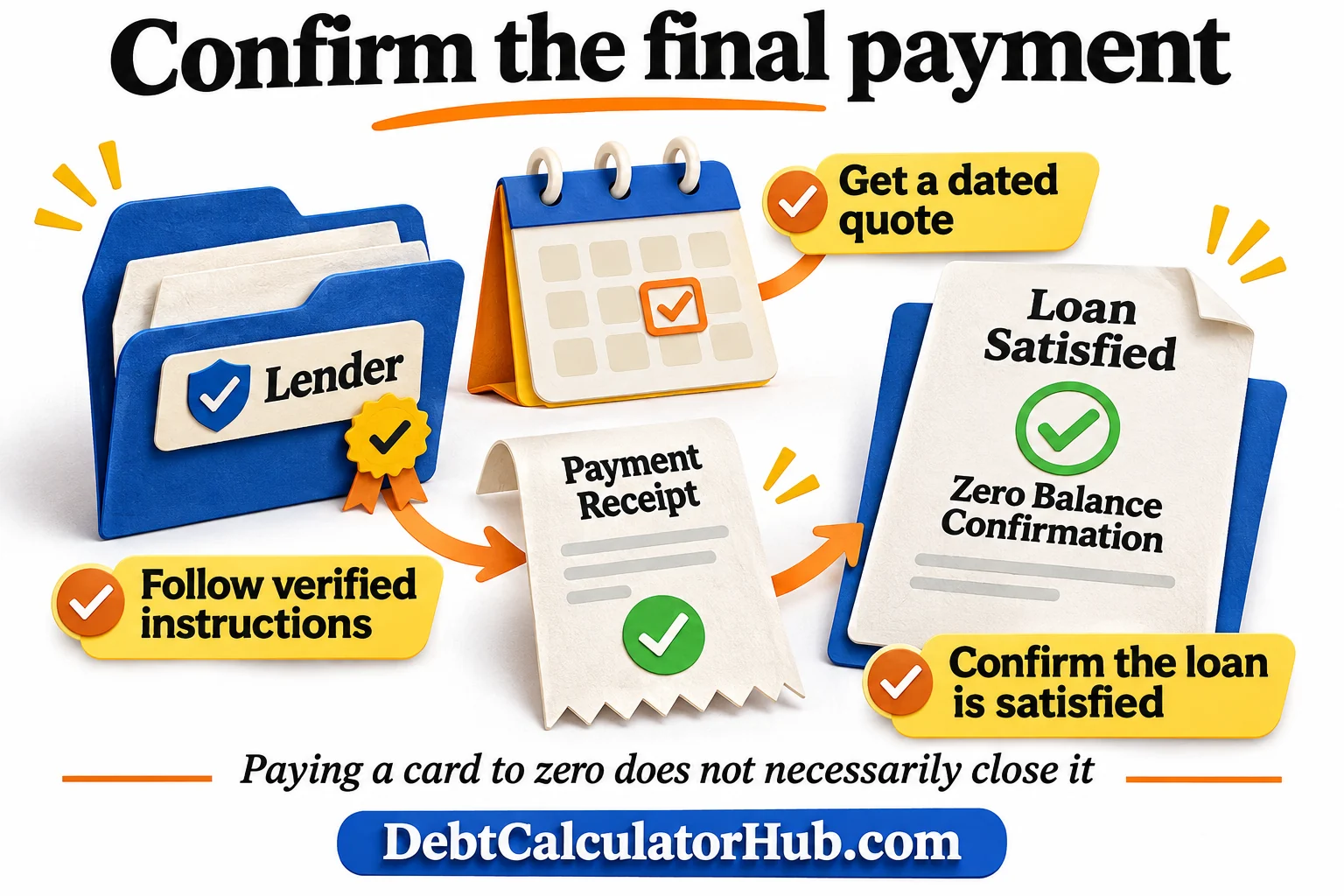
Make a dated payoff record
Keep these items together: the quote amount, good-through date, any stated daily interest, delivery instructions verified directly with the lender, and the payment confirmation. Also note pending payments or credits and ask whether the quote already includes them. Subtracting a payment twice can leave a shortfall.
If receipt will be later than the valid-through date, request a new quote; do not extend the example’s daily rate yourself unless the lender authorizes that method. After posting, confirm any remaining balance and whether a satisfaction letter or lien release is expected. For a card, also ask about residual interest and recurring transactions. A zero balance, a satisfied loan and a closed revolving account are separate outcomes to verify.
Sources and calculation notes
Our examples use the simplified monthly estimates described in our methodology. For the real-world terms and details discussed in this guide, consult these primary sources:
- CFPB mortgage guidance: why a payoff amount can differ from the displayed balance
- CFPB: obtaining an auto-loan payoff amount before a vehicle trade-in
- CFPB: how credit card interest can continue to accrue
Reviewed October 22, 2026. Examples are illustrations, not lender offers or account-specific payoff quotes. Actual terms and results depend on your account and lender.